Chenab River: Lifeline of the Himalayas and South Asia
The Chenab River is one of South Asia’s most important rivers, playing a crucial role in the geography, economy, agriculture, and geopolitics of the region.
Flowing through India and Pakistan, the Chenab is a key tributary of the Indus River system and a lifeline for millions of people who depend on its waters.
Origin and Course of the Chenab River
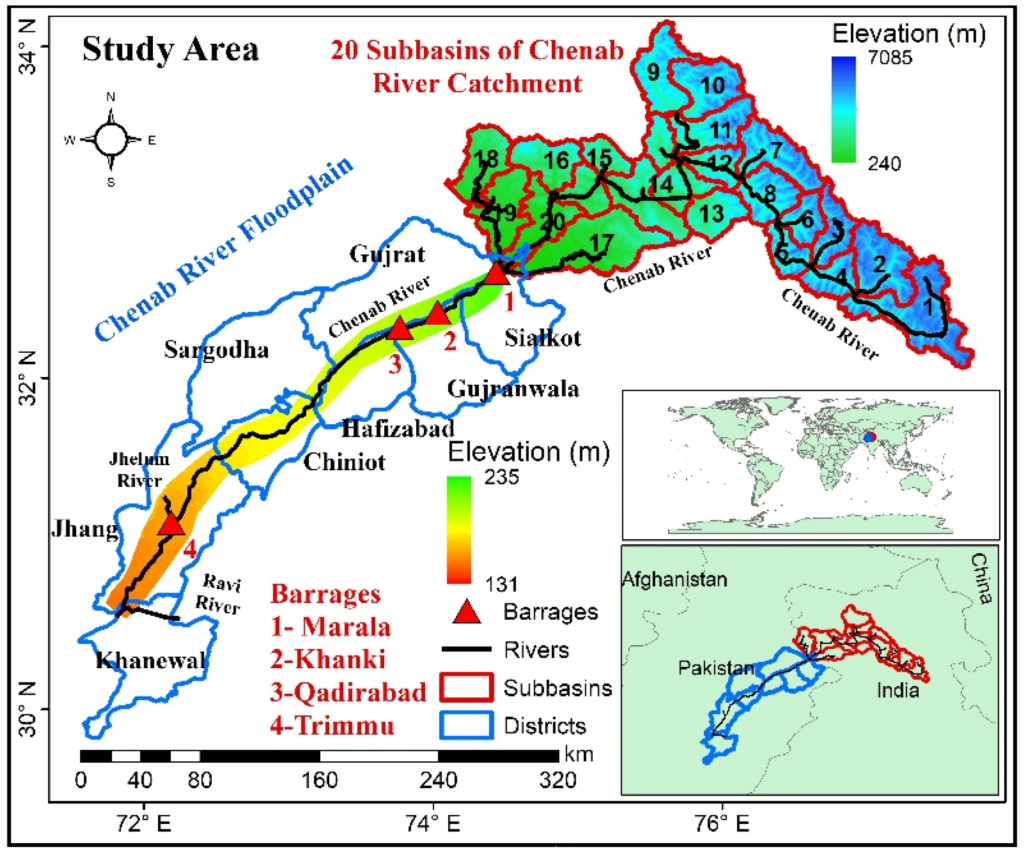
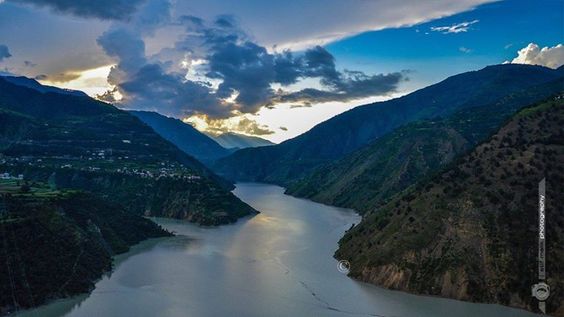
The Chenab River originates in the upper Himalayas in the Lahaul and Spiti region of Himachal Pradesh, India. The Chenab River is formed when the Chandra River and the Bhaga River meet near the town of Tandi.. From there, it flows northwest through Jammu and Kashmir, carving deep valleys and gorges before entering Pakistan’s Punjab province.
After flowing through fertile plains and supporting vast irrigation networks, the Chenab eventually merges with the Indus River, contributing significantly to one of the largest river systems in Asia. The total length of the river is approximately 960 kilometers (600 miles).
Historical and Cultural Significance
The Chenab is one of the five historic rivers of Punjab, a region whose name literally means “Land of Five Rivers.” For centuries, civilizations have flourished along its banks, using its waters for farming, trade, and settlement.
In ancient texts, the Chenab was known as Asikni or Chandrabhaga, and it is frequently mentioned in historical records, folklore, and regional literature. The river has shaped local cultures, traditions, and livelihoods across generations.
Economic Importance and Agriculture
The Chenab River is vital to agriculture, particularly in Pakistan’s Punjab region, often referred to as the country’s breadbasket. Its waters support extensive canal systems that irrigate millions of acres of farmland, enabling the production of crops such as wheat, rice, sugarcane, and cotton.
In India, the river also contributes to regional agriculture and supports local communities, especially in Jammu and surrounding areas.
Hydropower and Development
The fast-flowing waters of the Chenab make it ideal for hydropower generation. Several hydropower projects have been developed along the river, especially in India, including major dams designed to generate renewable energy while managing water flow.
These projects are significant for energy security but have also raised concerns about environmental impact, displacement, and water sharing, making the Chenab a focal point of regional discussions on sustainable development.
Geopolitical Importance and the Indus Waters Treaty
The Chenab River holds major strategic and political importance due to its shared nature between India and Pakistan. Under the Indus Waters Treaty of 1960, brokered by the World Bank, the Chenab—along with the Jhelum and Indus rivers—was allocated primarily to Pakistan.
India is permitted limited use of the Chenab’s waters for non-consumptive purposes, such as hydropower generation, as long as it does not significantly alter the river’s flow. This treaty is often cited as one of the most successful water-sharing agreements in the world, even amid political tensions.
Environmental Challenges
Like many major rivers, the Chenab faces growing environmental challenges, including:
- Climate change and glacial melting
- Water pollution from agricultural runoff and urban waste
- Ecosystem disruption due to dams and infrastructure
Protecting the river’s health is essential to ensuring long-term water security, biodiversity, and livelihoods in the region.
Why the Chenab River Matters Today
In an era of climate uncertainty, population growth, and rising water demand, the Chenab River represents more than just a waterway. It is a symbol of shared resources, cooperation, and sustainability in South Asia.
Understanding rivers like the Chenab is key to understanding broader global trends in water security, climate adaptation, and cross-border collaboration.