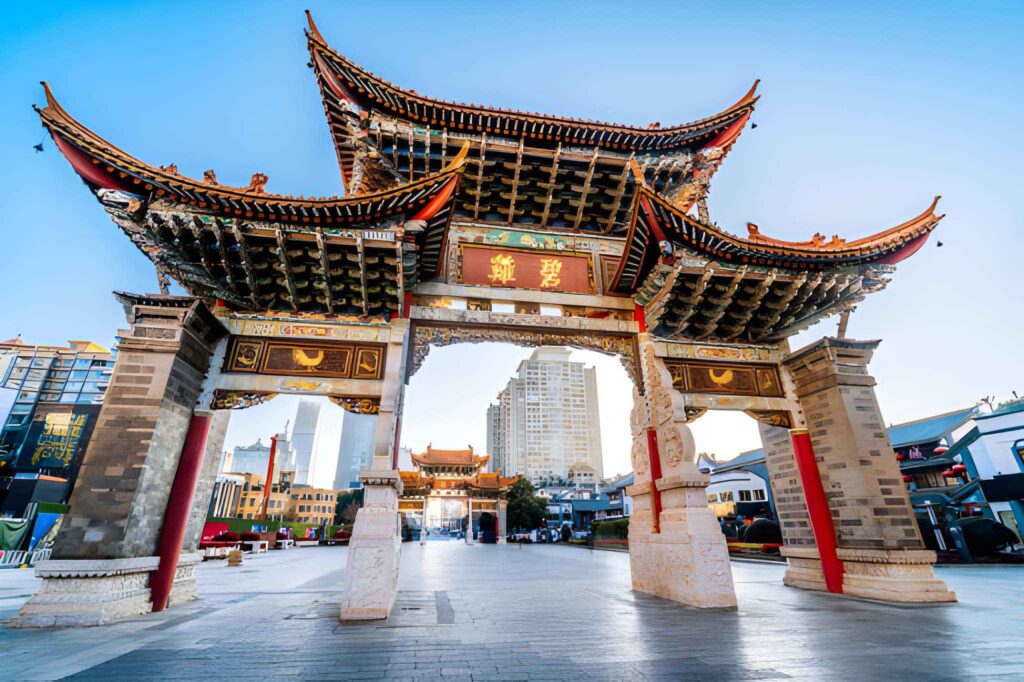
China is one of the world’s oldest civilizations and a country of immense cultural, historical, and economic significance. Located in East Asia, China is known for its ancient history, diverse landscapes, rich culture, technological innovation, and rapid economic growth. With over 1.4 billion people, China plays a major role in global politics, trade, and tourism.
Basic Facts About China
-
Official Name: People’s Republic of China
-
Capital: Beijing
-
Population: Over 1.4 billion
-
Total Area: 9.6 million sq. km
-
Currency: Chinese Yuan (CNY)
-
Official Language: Mandarin Chinese
-
Government: Single-party socialist republic
-
National Day: 1 October
China is the world’s most populous country and a global economic powerhouse.
Geography of China
China has one of the most diverse landscapes in the world.
-
Himalayan Mountains in the southwest, including Mount Everest (border with Nepal)
-
Gobi and Taklamakan deserts in the north and northwest
-
Yangtze and Yellow River basins, crucial for agriculture
-
Plateaus, grasslands, and forests across central China
-
Extensive coastline along the East China Sea, Yellow Sea, and South China Sea
China shares borders with 14 countries, including India, Russia, Mongolia, Nepal, and Vietnam.
A Glimpse into China’s History
China has a history spanning over 5,000 years, marked by dynasties, inventions, and cultural achievements.
Ancient China
-
Early dynasties: Xia, Shang, Zhou
-
Innovations: paper, gunpowder, printing, compass
-
Philosophy: Confucianism, Taoism, Legalism
Imperial China
-
Major dynasties: Qin, Han, Tang, Song, Ming, Qing
-
Achievements: Great Wall of China, Forbidden City, Silk Road trade
-
Expansion of arts, literature, and infrastructure
Modern China
-
End of imperial rule in 1912
-
Founding of the People’s Republic of China in 1949
-
Rapid industrialization, urbanization, and economic growth
Chinese Culture and Traditions
China has one of the world’s richest cultural heritages, with traditions that span thousands of years.
Major Religions and Philosophies: Buddhism, Taoism, Confucianism, Islam, Christianity
Festivals: Chinese New Year, Mid-Autumn Festival, Dragon Boat Festival, Lantern Festival
Traditional Clothing: Hanfu, Qipao (Cheongsam), Tang suit
Languages: Mandarin (official), Cantonese, Shanghainese, and other regional dialects
Chinese Food and Cuisine
Chinese cuisine is famous worldwide for its variety, flavor, and regional differences.
Popular Dishes:
-
Peking Duck
-
Dim Sum
-
Sweet and Sour Pork
-
Kung Pao Chicken
-
Dumplings and Baozi
-
Hotpot
Regional Cuisine Styles: Sichuan (spicy), Cantonese (mild and fresh), Hunan (hot and sour), Jiangsu (sweet and savory)
Economy of China
China has the second-largest economy in the world and is a global manufacturing hub.
Key Economic Sectors:
-
Manufacturing and exports
-
Information Technology (IT)
-
Agriculture
-
Renewable energy
-
E-commerce and startups
China is also a leader in high-speed rail, space technology, and artificial intelligence.
Education and Technology
-
Prestigious universities: Peking University, Tsinghua University
-
Advances in AI, robotics, space exploration (CNSA), and digital payments
-
High literacy rate and strong focus on STEM education
Tourism in China
China attracts millions of tourists annually with its historic sites, natural beauty, and modern cities.
Famous Tourist Attractions:
-
Great Wall of China
-
Forbidden City, Beijing
-
Terracotta Army, Xi’an
-
Li River and Guilin landscapes
-
Shanghai skyline
-
Zhangjiajie National Forest Park
China offers cultural tourism, nature tourism, adventure tourism, and heritage tourism.
Modern China
Modern China blends ancient traditions with rapid technological and economic growth:
-
Expanding infrastructure and urban development
-
Leading global technology and manufacturing
-
Active role in international politics and trade
-
Preservation of cultural heritage and festivals
Conclusion
China is a land of ancient civilizations, technological innovation, and cultural richness. From the Great Wall to modern skyscrapers, China continues to shape global history, economy, and culture. Whether you are traveling, studying, or doing business, China offers countless opportunities for exploration and growth.
FAQ Section About China
Q1: What is the population of China?
A: China has over 1.4 billion people, making it the most populous country in the world.
Q2: What is the capital of China?
A: Beijing
Q3: What is the official language of China?
A: Mandarin Chinese
Q4: What is China’s currency?
A: Chinese Yuan (CNY)
Q5: When is China’s National Day?
A: 1 October
Q6: What are famous tourist attractions in China?
A: Great Wall of China, Forbidden City, Terracotta Army, Li River, Zhangjiajie, and Shanghai skyline
Q7: What are traditional Chinese festivals?
A: Chinese New Year, Mid-Autumn Festival, Dragon Boat Festival, Lantern Festival
Q8: What are major achievements of ancient China?
A: Inventions like paper, printing, gunpowder, and the compass, plus the Silk Road trade network
Q9: What are popular Chinese dishes?
A: Peking Duck, Dim Sum, Sweet and Sour Pork, Kung Pao Chicken, Dumplings, Hotpot
Q10: What are China’s main economic sectors?
A: Manufacturing, IT, agriculture, renewable energy, e-commerce, and high-tech industries