Introduction
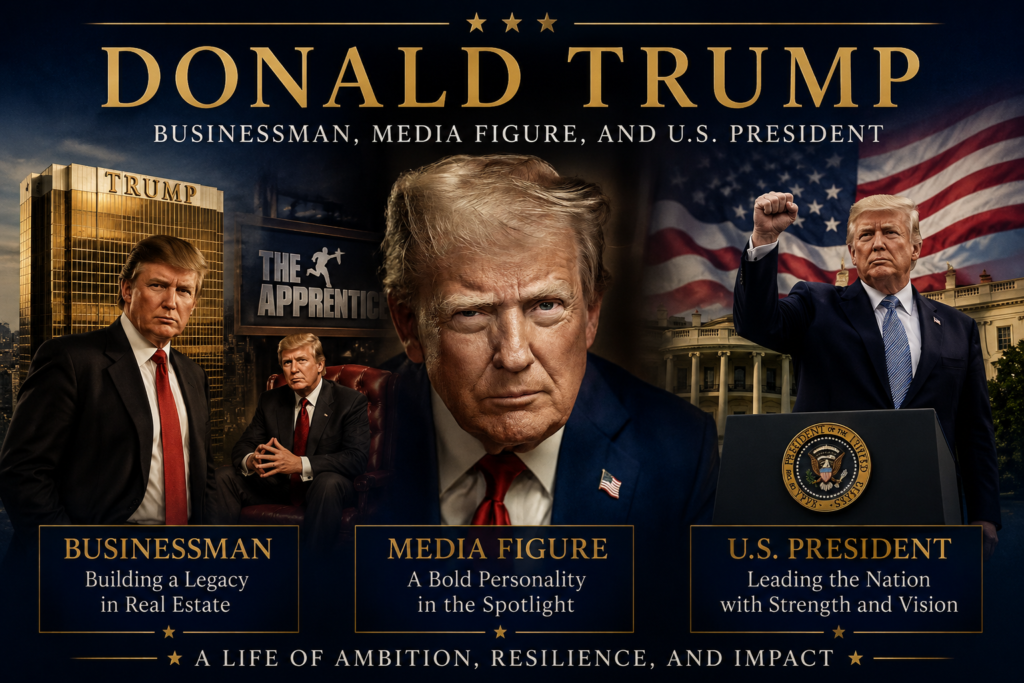
Donald Trump is one of the most recognized and controversial political figures in modern history. Known for his background in real estate, television, and politics, Trump transformed from a New York businessman into a global political brand. His influence on American politics, media, and international relations continues to shape debates across the world.
This article explores Donald Trump’s early life, business empire, political rise, presidency, major policies, controversies, and lasting impact.
Early Life and Education
Donald John Trump was born on June 14, 1946, in the borough of Queens, New York City. He was the fourth of five children born to real estate developer Fred Trump and Mary Anne MacLeod Trump.
Trump attended the New York Military Academy before studying economics at the University of Pennsylvania’s Wharton School, one of the top business schools in the United States. He graduated in 1968 with a degree in economics.
From an early age, Trump was exposed to the real estate industry through his father’s successful property business.
Building the Trump Business Empire
During the 1970s and 1980s, Trump expanded the family business into Manhattan real estate. He developed luxury buildings, hotels, casinos, and golf resorts under the Trump brand.
Some of his most famous projects include:
- 1.Trump Tower in New York City
- 2.Trump International Hotel properties
- 3.Trump golf resorts
- 4.Atlantic City casino ventures
Trump became known for his aggressive business style and strong focus on branding. His name became associated with luxury real estate and high-profile developments worldwide.
Although several of his businesses faced financial difficulties and bankruptcies, Trump consistently remained a major public figure in American business culture.
Rise as a Media Personality
Trump gained even greater fame through television. In 2004, he became the host of the reality TV show:
The Apprentice
The program featured contestants competing for business opportunities inside Trump’s organization. His catchphrase, “You’re fired,” became internationally famous.
The success of the show significantly boosted Trump’s public profile and helped build his political popularity years later.
Entry Into Politics
Although Trump had discussed politics for many years, he officially launched his presidential campaign in 2015 as a Republican candidate.
His campaign focused heavily on:
- Immigration control
- Economic nationalism
- Trade reform
- Border security
- “America First” policies
Trump’s direct communication style and use of social media helped him connect with millions of voters.
In 2016, he defeated:
Hillary Clinton
to become the 45th president of the United States.
Donald Trump’s Presidency (2017–2021)
Trump’s presidency was marked by major political, economic, and international developments.
Key Policies and Actions
Tax Reform
Trump signed significant tax cuts aimed at businesses and individuals.
Immigration Policies
His administration introduced stricter immigration enforcement and border security measures, including efforts to build a wall along the U.S.–Mexico border.
Foreign Policy
Trump engaged in high-profile diplomacy with countries including:
- North Korea
- China
- Russia
- Middle Eastern nations
Economic Growth
Before the COVID-19 pandemic, the U.S. economy experienced strong stock market growth and low unemployment rates.
COVID-19 Pandemic
The pandemic became one of the biggest challenges of his presidency, generating major debates about public health, lockdowns, vaccines, and economic policy.
Controversies and Criticism
Trump’s political career has also been surrounded by controversy.
Major issues included:
- Impeachment proceedings
- Election disputes
- Legal investigations
- Media conflicts
- Statements on social and political issues
Supporters view Trump as a political outsider who challenged traditional systems, while critics argue his leadership style increased political polarization.
2024 Election and Return to Office
After losing the 2020 election to:
Joe Biden
Trump remained highly influential within the Republican Party.
He later campaigned again and returned to the presidency in 2025, becoming one of the few U.S. presidents in history to serve non-consecutive terms.
His return significantly reshaped American political discussions both domestically and internationally.
Influence on American Politics
Donald Trump changed modern political communication through:
- Social media usage
- Large political rallies
- Direct voter engagement
- Anti-establishment messaging
His movement continues to influence:
- Republican Party policies
- Conservative media
- International populist politics
Trump remains one of the most debated political figures of the 21st century.
Business Brand and Global Recognition
Beyond politics, Trump’s name remains a global commercial brand associated with:
- Luxury real estate
- Hotels
- Golf courses
- Licensing deals
- Media appearances
His supporters see him as a symbol of business success and nationalism, while critics often focus on legal controversies and divisive rhetoric.
Conclusion
Donald Trump has had an extraordinary journey from businessman and television celebrity to one of the most influential political leaders in modern American history.
Whether admired or criticized, Trump’s impact on politics, media, and public discourse is undeniable. His leadership style, policies, and political movement continue to shape conversations across the United States and around the world.
Frequently Asked Questions (FAQs)
Who is Donald Trump?
Donald Trump is an American businessman, television personality, and politician who served as the 45th and 47th president of the United States.
What businesses does Donald Trump own?
Trump has been involved in real estate, hotels, golf resorts, branding, and entertainment businesses through the Trump Organization.
What TV show made Donald Trump famous?
Trump became widely known through the reality television show The Apprentice.
When was Donald Trump first elected president?
He was first elected president in 2016.
What is Donald Trump known for politically?
He is known for “America First” policies, immigration reform efforts, trade negotiations, and populist political messaging.